
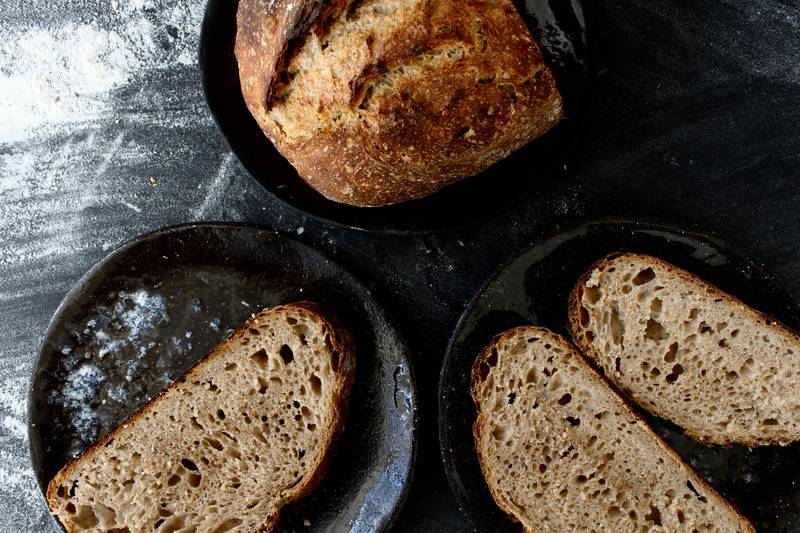
Sourdough is one of those things that seems simple on the surface, flour, water, salt, time, but the moment you start asking questions, it gets deep fast. And one of the most common questions we hear at Kern River Milling is this: “Which flour should I actually be using?”
It’s a great question. And the honest answer is: it depends on what kind of sourdough you’re going for. A mild, open-crumbed sandwich loaf? A bold, chewy artisan boule? A tender, slightly tangy everyday bread? Each one has a flour (or a combination of flours) that’s going to get you there faster.
Let’s walk through what we carry, how each one behaves in sourdough, and what we’d actually recommend depending on where you are in your sourdough journey.
Why Fresh-Milled Flour Makes Better Sourdough
Before we get into the specifics, it’s worth pausing on why fresh-milled flour and sourdough go together so well.
Your sourdough starter is a living culture. It feeds on the natural sugars and wild yeasts found in grain, and fresh-milled flour has significantly more of both than flour that’s been sitting on a shelf for months. The bran and germ, which are removed from commercial white flour, are full of the enzymes and nutrients that wild yeast and bacteria thrive on. When you feed your starter with freshly milled whole grain flour, it becomes more active, more flavorful, and frankly a lot more fun to work with.
Fresh-milled sourdough also has a depth of flavor that store-bought flour just can’t touch. That complex, slightly nutty, mildly tangy flavor you’re chasing in a good sourdough loaf? A lot of that comes from the grain itself, not just the fermentation. You can read more about why freshness matters on our Why Fresh-Milled Flour page.
The Best Flours for Sourdough at Kern River Milling
Hard White Wheat, Best for Beginners & Everyday Loaves
If you’re just getting into sourdough and want a reliable, forgiving flour to start with, Hard White Wheat is our top pick. It has the high protein content (~11–13%) and strong gluten structure you need for a good rise, but with a mild, slightly sweet flavor that won’t overwhelm a beginner’s palate or scare off family members who are new to whole wheat bread.
Loaves made with Hard White have a beautiful golden crumb, soft texture, and just enough of that sourdough tang without going too bold. It’s also one of the most versatile flours we carry, your starter will love it, your dough will behave predictably, and your final loaf will look and taste like something you’d pay good money for at a bakery.
Best for: First sourdough loaves, everyday sandwich sourdough, family-friendly whole wheat loaves.
Hard Red Wheat, Best for Bold, Artisan-Style Loaves
If Hard White is the easygoing everyday flour, Hard Red Wheat is its bolder, more complex sibling. It has a higher protein content and a deeper, earthier flavor, that classic “whole wheat” taste that a lot of sourdough purists are looking for.
Hard Red produces a denser, chewier crumb with a more pronounced crust. If you’ve ever had a bakery-style sourdough boule with that deep flavor and thick, crackly crust, there’s a good chance Hard Red was involved. It makes an incredible starter food too, the extra bran in Hard Red is especially rich in the wild yeasts and bacteria that make a starter lively and strong.
The trade-off is that it’s less forgiving than Hard White, and the flavor can be more assertive. But if you love a bold loaf, this is your flour.
Best for: Artisan boules, country-style sourdough, sourdough with a deep wheaty flavor.
Rye Flour, Best for Supercharging Your Starter
Here’s a secret that experienced sourdough bakers already know: a small amount of Rye flour in your starter changes everything.
Rye is hands-down the most enzyme-active grain you can feed a sourdough culture. It ferments faster, activates wild yeast more aggressively, and gives your starter that bubbly, vigorous activity you’re always hoping to see. Even just replacing 10–20% of your starter’s flour with Rye can make a noticeable difference in how lively it gets, especially in cooler months when fermentation slows down.
As a loaf flour, Rye adds a distinct earthy, slightly tangy flavor. It’s lower in gluten than wheat, so most bakers blend it with a high-protein flour like Hard White or Hard Red rather than using it 100% on its own. A blend of 80% Hard White + 20% Rye is a classic combination that gives you a great rise, a complex flavor, and a loaf with real personality.
Best for: Feeding your sourdough starter, blending for flavor complexity, traditional rye-wheat loaves.
Einkorn, Best for Ancient Grain Sourdough
Einkorn is one of the oldest cultivated grains on earth, and it makes a sourdough unlike anything else. It has a rich, buttery, almost nutty flavor and a gorgeous golden color that makes your crumb look like it came out of an artisan bakery in Italy.
The catch with Einkorn is that its gluten structure is different from modern wheat, it’s weaker and more extensible, which means your dough will be stickier and require a gentler hand. It doesn’t develop the same airy open crumb that Hard White or Hard Red will give you. But if you’re after flavor above everything else, Einkorn delivers in a way that modern wheats just don’t.
It’s also naturally lower in gluten than modern wheat varieties, which some people with wheat sensitivities find easier to tolerate (though it does still contain gluten, it is not suitable for those with celiac disease).
Best for: Ancient grain enthusiasts, flavor-forward bakers, those looking for something unique.
👉 Shop Fresh-Milled Einkorn Flour
Khorasan, Best for a Rich, Golden Loaf
Khorasan (sometimes sold under the brand name Kamut) is another ancient grain that’s been making a big comeback in artisan baking circles. It has a sweet, buttery flavor and produces a loaf with a rich golden hue and a dense, moist crumb.
Like Einkorn, Khorasan has a slightly different gluten structure than modern wheat, so it works best when blended, try using it as 25–30% of your flour mix alongside Hard White or Hard Red for the best of both worlds. You get the structure and rise from the modern wheat, and the incredible flavor from the Khorasan.
Best for: Flavor blending, golden artisan loaves, bakers who want to experiment with heritage grains.
So, Which One Should You Start With?
If you’re brand new to sourdough and fresh-milled flour, here’s our honest, no-fluff recommendation:
Start with Hard White Wheat. It’s forgiving, flavorful, and gives you the best chance of a successful first loaf. Once you’ve got your starter healthy and your process dialed in, start experimenting, add a scoop of Rye to your starter, try blending in some Hard Red, or go full Einkorn when you’re feeling adventurous.
Sourdough with fresh-milled flour is a journey, not a destination. The beauty of it is that every flour tells a slightly different story in the final loaf. We love hearing about what our customers are baking, so when you pull something great out of the oven, share it with us.
Ready to Start Baking?
All of our flours are stone-ground to order using premium, non-GMO wheat berries, milled fresh so you’re getting every bit of flavor and nutrition the grain has to offer.
👉 Shop All Fresh-Milled Flours
Free shipping on orders over $100, use code freeshipping at checkout. We ship throughout the United States, and local pickup is available in Bakersfield, CA.
New to fresh-milled flour altogether? Sign up for our newsletter and we’ll send you a free Beginner’s Guide straight to your inbox. Or if you really want to hit the ground running, check out our Fresh-Milled Flour 101 Class, it’s the fastest way to go from curious to confident.