
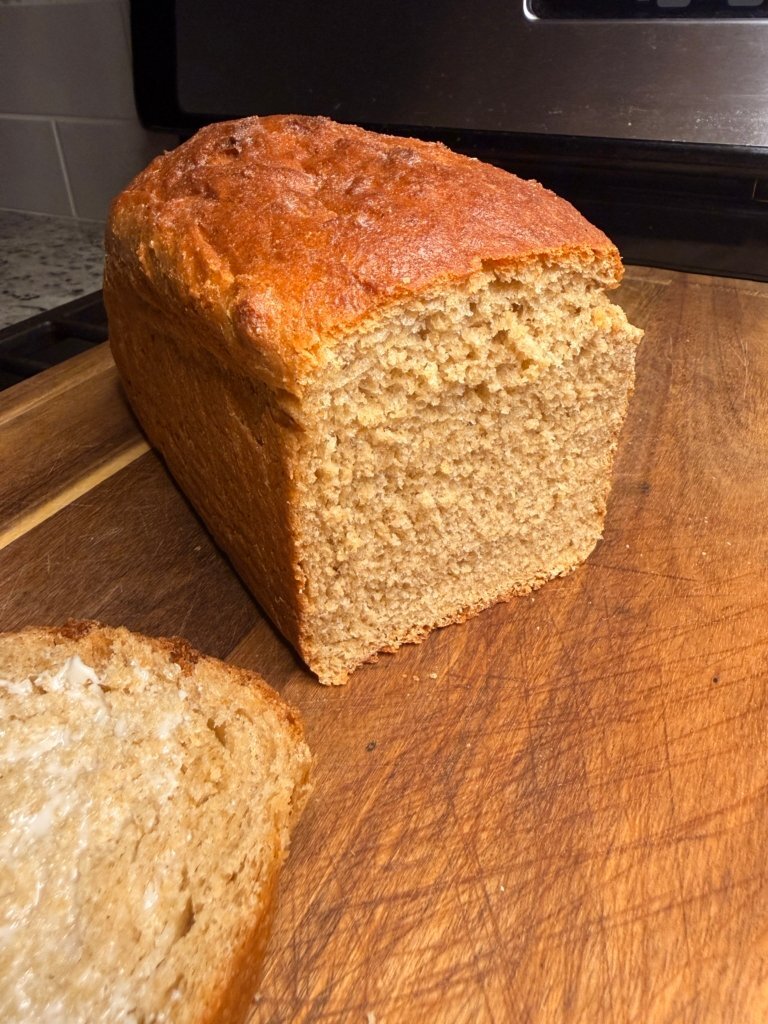
How Long Does Fresh-Milled Flour Last?
This is one of the most common questions we get here at Kern River Milling, and it’s a great question because fresh-milled flour is very different from the flour most people are used to buying at the grocery store.
The short answer is that fresh-milled flour is best used within about 7–10 days when stored on your counter. After that, it doesn’t suddenly go bad, but the nutritional value, flavor, and freshness will gradually begin to decline.
This is exactly why we mill every order fresh instead of milling large batches and letting them sit on a shelf for weeks or even months before they reach your kitchen.
Why Fresh-Milled Flour Changes Over Time
To understand why storage matters, it helps to understand what makes fresh-milled flour different in the first place.
When wheat berries are milled into flour, the entire grain is included. That means the bran, germ, and endosperm are all still present. The germ is especially important because it contains many of the natural oils, nutrients, vitamins, and flavor compounds that make whole grain flour so valuable.
The moment those wheat berries are milled, those oils and nutrients are exposed to oxygen, light, heat, and moisture. Over time, these natural elements begin to affect the flour.
This doesn’t mean your flour becomes unusable after a week. It simply means that the flour is at its peak freshness shortly after milling and gradually loses some of the qualities that make fresh-milled flour special.
That’s one of the biggest reasons many home bakers choose fresh-milled flour in the first place. They’re looking for flour that hasn’t spent months traveling through warehouses, distribution centers, and grocery store shelves before arriving in their kitchen.
Why We Mill To Order
At Kern River Milling, we believe that if you’re paying for fresh-milled flour, it should actually be fresh.
That’s why we don’t mill flour weeks or months in advance and store it in inventory waiting for an order. Instead, we mill your flour after your order is placed and then prepare it for shipment.
For us, that process simply makes sense.
Our goal is to get fresh flour from the wheat berry to your kitchen as quickly as possible so you can enjoy it when it’s at its best.
Fresh flour has a rich aroma, incredible flavor, and all of the natural parts of the grain intact. We want our customers to experience that difference firsthand.
What Is The Best Way To Store Fresh-Milled Flour?
Once your Kern River Milling order arrives, there are two excellent ways to store your flour.
The best choice depends on how quickly you plan to use it.
Option 1: Refrigerator Storage
If you’re planning to bake with your flour within the next few days or weeks, the refrigerator is a great option.
Keeping fresh-milled flour refrigerated helps slow down the natural changes that occur after milling while keeping the flour easily accessible whenever you’re ready to bake.
Many of our customers keep a working supply of flour in the refrigerator so it’s always ready for their next loaf of bread, batch of cookies, pizza dough, or sourdough bake.
When stored properly in an airtight container, fresh-milled flour can generally remain in excellent condition in the refrigerator for several weeks.
Option 2: Freezer Storage
If you don’t plan to use your flour right away, the freezer is your best option.
Freezing significantly slows down the natural oxidation process and helps preserve freshness, flavor, and nutritional quality for much longer.
This is the storage method we recommend for anyone who likes to buy flour in larger quantities or wants to keep extra flour on hand for future baking projects.
When stored in an airtight container or freezer-safe bag, fresh-milled flour can last up to six months in the freezer while maintaining excellent quality.
Many experienced fresh-milled flour bakers store the majority of their flour in the freezer and simply move smaller amounts into the refrigerator as needed.
How Can You Tell If Fresh-Milled Flour Is Still Good?
Fresh-milled flour doesn’t typically spoil overnight.
Instead, freshness gradually changes over time.
If flour has been stored properly, it will usually retain a pleasant wheat aroma and natural appearance. If it develops an unusual smell, excessive moisture, or signs of contamination, it should be discarded.
Proper storage is the key.
Keeping flour sealed, cool, and protected from moisture will help maintain quality and extend its usable life.
The Bottom Line
Fresh-milled flour is different because it’s alive with the natural oils, nutrients, and flavor that are found inside the whole grain.
That’s also why storage matters.
For the best experience, we recommend using fresh-milled flour within about 7–10 days when stored at room temperature. If you need to store it longer, the refrigerator works well for several weeks, and the freezer can preserve quality for up to six months.
Here at Kern River Milling, we mill every order fresh because we believe flour should spend less time sitting on a shelf and more time helping you create something amazing in your kitchen.
After all, if you’re choosing fresh-milled flour, you deserve flour that’s actually fresh.
Order your fresh-milled flour and get it shipped to you fast!
- Best For Bread
HARD RED WHEAT FLOUR
Price range: $15.00 through $87.00Clear3 Pounds10 Pounds25 Pounds - Best For Bread
HARD WHITE WHEAT FLOUR
Price range: $15.00 through $87.00Clear3 Pounds10 Pounds25 Pounds - Best For Pastries
SOFT WHITE WHEAT FLOUR
Price range: $15.00 through $87.00Clear3 Pounds10 Pounds25 Pounds - Best For Pastries
SPELT WHEAT FLOUR
Price range: $15.00 through $87.00Clear3 Pounds10 Pounds25 Pounds

Hi there. Quick question.
I purchased freshly milled flour and it’s been in my cold basement cellar for quite a few months in a cooler.,(please don’t judge me for not knowing the rules right away) let’s just say the IG reels got the better of me and know I wanted to try using some up. Cake flour, bread flour, daily grind flour, would I still be ok to use this flour or would it make me sick? I don’t know what smell I should be looking for like it smells a little but I was just thinking it was bc it was milled. when I opened the cooler I smelled it.. These are all still in sealed brown bags too though. I opened one and it looked ok. Looking for some guidance on this please if you could so kindly help.
Hi Catherine,
Thank you for your question. This is a very common question that we get a lot, so no problem at all, we are happy to answer it for you! We recommend that you store your flour in the fridge for storage up to 2 weeks. If you need longer than 2 weeks its best to just put it straight into your freezer. It will last up to 6 months this way. Also when order fresh-milled flour from either us here at Kern River Milling, or any other fresh-milled flour company, it’s always best to put the fresh-milled flour in a air tight container or freezer ziplock bag. The best part about storing it in the freezer is that it doesn’t crystalize, like other foods do, so it won’t get freezer burn. Regarding the smell. If it smells like flour you should be good still, but if it smells spoiled, like sour smelling then you might want to toss it, you might then consider ordering another fresh batch. We have a lot of options you can find here. My question would be is the fresh-milled flour you are saying smells, was it store in a fridge for the length of time you mentioned or a was it stored in a freezer? I hope we answered your questions. If you have further questions you can, respond here, reach out to us at our support email, or call us at: 661-241-0367