
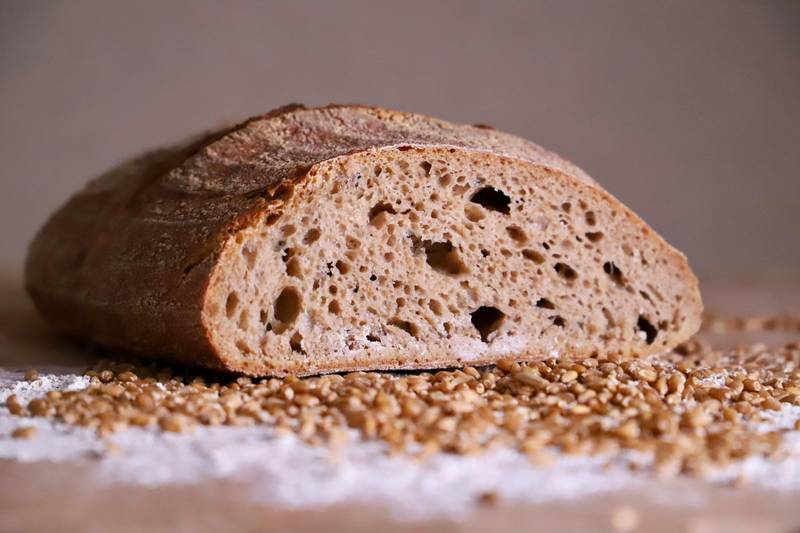
If your whole wheat bread isn’t rising the way you expected, you’re not alone. This is one of the most common (and frustrating) problems home bakers run into—especially when switching to whole wheat or fresh-milled flour.
If your loaves are coming out dense or flat, you might also want to check out why is my whole wheat bread dense? post, since the two issues are usually connected.
The good news? It’s almost always fixable.
Why didn’t my whole wheat bread rise?
There are a few common reasons:
- The dough didn’t develop enough gluten
- The yeast wasn’t active (or needed more time)
- The dough didn’t hydrate properly
- The rise time was too short (or too long)
Whole wheat flour behaves very differently than white flour. It contains the entire wheat kernel (bran + germ), which makes it heavier and more complex to work with.
If you’re using fresh-milled whole wheat flour, this becomes even more noticeable—because the flour is more active and nutrient-dense.
Is whole wheat bread harder to get to rise?
Yes, it is.
The bran in whole wheat flour can actually cut through gluten strands, making it harder for the dough to trap gas and expand.
That’s why whole wheat bread:
- Rises slower
- Feels denser
- Needs more hydration and rest time
If you’re new to baking with fresh flour, you may also want to read “fresh milled flour vs store bought flour” to understand why your results are different.
Do I need more yeast for whole wheat bread?
Sometimes—but not always.
The bigger issue is usually time, not yeast quantity.
Instead of immediately adding more yeast, try:
- Letting the dough rise longer
- Keeping it in a warmer environment
- Making sure your yeast is fresh and active
If your dough feels sluggish and dense, it’s often tied to hydration and structure—something I break down more in “why is my whole wheat bread dense?” post.
How long should I let whole wheat dough rise?
Longer than you think.
Whole wheat dough often needs:
- 1.5x to 2x longer rise time than white dough
- A warm spot (around 75–80°F if possible)
Don’t rely strictly on the clock—watch the dough.
You’re looking for:
- A noticeable increase in size
- A slightly puffy, airy feel
- A dough that springs back slowly when pressed
If your dough feels overly sticky during this stage, that’s another common issue.
Can over-proofing cause my bread not to rise?
Yes—and it’s more common than people think.
If your dough rises too long:
- The gluten structure weakens
- The dough collapses
- It won’t rise properly in the oven
This can feel confusing because:
“I let it rise longer like everyone says… but it got worse.”
That’s because there’s a balance.
If you’re trying to dial this in, it helps to understand how fresh flour behaves differently during fermentation—something explained in “fresh milled vs store bought” post.
Why fresh-milled flour changes everything
If you’re using fresh-milled flour, here’s what to know:
- It absorbs more water
- It ferments differently
- It’s more nutrient-dense, which affects yeast activity
This means:
- Your dough may need more hydration
- Your rise times may vary more
- Your results improve as you learn your flour
If you haven’t baked with it before, start with a high-quality option like our “Hard White Wheat Fresh-Milled Flour” so you can get consistent results.
How to fix whole wheat bread that won’t rise
If you want better results right away, focus on these:
1. Increase hydration
Whole wheat flour needs more water. Slightly wetter dough = better rise.
(Especially important if you’re using Fresh-Milled Flour)
2. Let it rest (autolyse)
Mix flour + water and let it sit for 20–30 minutes before adding yeast and salt.
This helps gluten develop naturally.
3. Knead thoroughly
You need strong gluten development to support a good rise.
4. Give it time
Don’t rush fermentation—this is where most people go wrong.
5. Use a warm environment
Cold kitchens slow everything down more than you think.
Final thoughts
Whole wheat bread that doesn’t rise isn’t a failure—it’s just a signal that something needs adjusting.
Once you understand:
- Hydration
- Time
- Gluten development
Everything starts to click.
And if you’re baking with fresh-milled flour, you’re already ahead—you just need to learn how to work with it.
If you’re continuing to troubleshoot, I’d recommend also reading:
Together, these will give you a complete picture—and help you get consistent, high-rising loaves.
How would the bread making process differ with sourdough starter instead of yeast? Would you be able to provide steps and tips on how to obtain bread that isn’t dense using sourdough starter instead?
Great question!
The biggest difference when using sourdough starter instead of commercial yeast is patience. Sourdough takes longer, but in our opinion, the flavor and texture are absolutely worth the extra time.
When it comes to dense bread, the same culprits usually show up whether you’re using yeast or sourdough: not enough fermentation time, a weak starter, or dough that just hasn’t developed enough strength.
With fresh-milled flour, one thing we’ve noticed is that it often needs a little more water than people expect. A dough that feels too dry can easily lead to a denser loaf. Fresh-milled flour is alive and absorbs moisture differently than store-bought flour that’s been sitting on a shelf for months.
A few things we’d pay close attention to:
• Make sure your starter is active and bubbly before mixing your dough.
• Don’t rush fermentation. Sourdough moves on its own schedule.
• Give the dough a few rounds of stretch and folds during bulk fermentation to build strength.
• Let the dough become noticeably puffy before shaping.
• Bake in a thoroughly preheated Dutch oven if possible to help with oven spring.
Every kitchen is a little different, so honestly, the best advice we can give is to watch the dough more than the clock.
If you’d like, tell us what flour you’re using and walk us through your current process. We’d be happy to help troubleshoot and see if we can figure out what’s causing the density in your loaves!