
Whole Grain vs. Refined Grain: What’s the Difference?
Why milling fresh matters—and what’s really in your flour.
Before we talk about how we got here—or where we’re going—it helps to understand what we’re working with.
A wheat berry is a complete little package, designed to nourish. When it’s left whole and freshly milled, it gives you everything your body needs: fiber, protein, healthy fats, B vitamins, and even antioxidants. But most of what we find on store shelves? That’s not the whole story.
Let’s break it down.
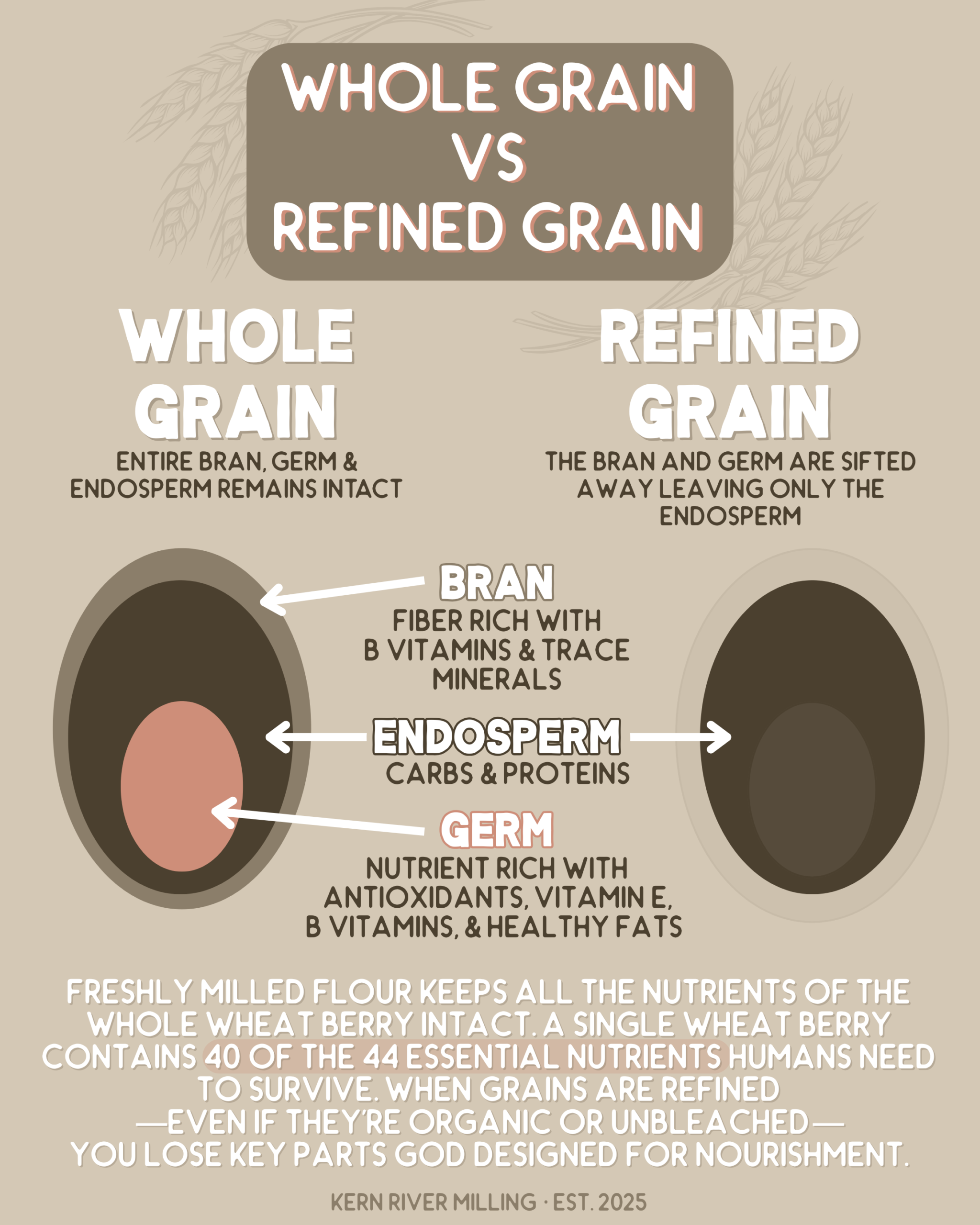
The Three Parts of a Wheat Berry
- Bran: The fiber-rich outer layer, packed with B vitamins and trace minerals. This is what keeps digestion regular, blood sugar stable, and energy lasting.
- Endosperm: The starchy middle layer. It provides carbohydrates and a bit of protein. This is the only part that makes it into white flour.
- Germ: The inner core, full of antioxidants, vitamin E, healthy fats, and more B vitamins. It’s the part that makes wheat truly nourishing—and the part most often removed.
Whole Grain = Complete Nutrition
Freshly milled flour keeps all three parts of the grain intact. It contains nearly 40 of the 44 essential nutrients the human body needs to survive.
When the bran and germ are stripped away, we lose a huge portion of what makes wheat so powerful—no matter how organic or unbleached that bag of white flour might be.
Even if nutrients are later added back in (more on that in Part 2), it’s not the same.
What’s the Takeaway?
If you want bread that truly nourishes—fiber, vitamins, minerals, healthy fats—it has to start with the whole grain. And the best way to keep it whole is to mill it fresh.
Whether you’re using your own grain mill or picking up a bag from a local micro-miller, it’s one of the simplest, most powerful ways to bring real nourishment back to the table.