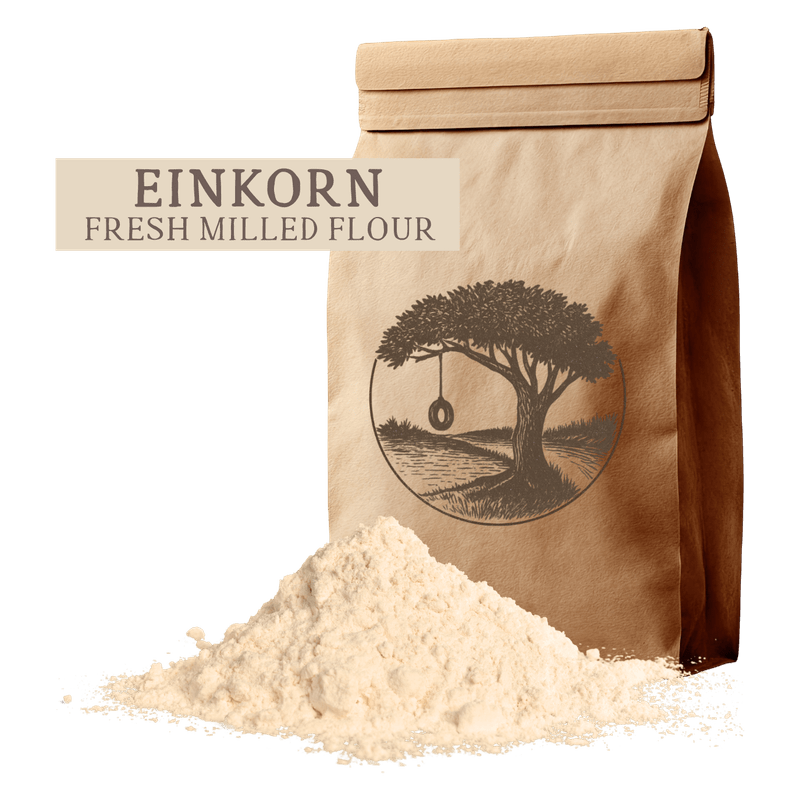
What Is Einkorn Flour? Your Questions Answered
Einkorn is having a moment, and for good reason. It’s one of the oldest cultivated grains on earth, and people are rediscovering it for its rich flavor, impressive nutrition, and gentler effect on digestion. But if you’re new to einkorn, you probably have a lot of questions. We’ve answered the most common ones below.
What is einkorn flour?
Einkorn (Triticum monococcum) is the oldest known variety of wheat, first cultivated over 10,000 years ago in the Fertile Crescent. Unlike modern wheat, which has been hybridized and modified for higher yields, einkorn has never been crossbred. It remains genetically close to its wild ancestor, which is a big part of why so many people are returning to it.
At Kern River Milling, we mill einkorn fresh to order, meaning you get the full grain, bran, germ, and endosperm, with none of the nutrients stripped away.
Is einkorn flour the same as ancient grain flour?
Not exactly. “Ancient grain” is a broad category that includes several unhybridized or minimally modified grains: einkorn, emmer, spelt, khorasan (also called Kamut), and others. Einkorn is the oldest of the ancient wheats and is considered the most primitive. So while einkorn is an ancient grain, not all ancient grain products contain einkorn specifically.
Is einkorn flour better for you than regular wheat flour?
Einkorn has a different nutritional profile than modern whole wheat. Here’s what sets it apart:
- Higher in protein, einkorn typically contains more protein per serving than modern wheat
- More antioxidants, particularly lutein, a carotenoid linked to eye health
- Higher in essential fatty acids, especially in fresh-milled form, before oxidation occurs
- Lower in phytic acid, which can interfere with mineral absorption in conventional whole wheat
It also has a lower yield than modern wheat, one of the reasons it was largely abandoned in commercial agriculture, which means it hasn’t been pushed to maximize starch output at the expense of nutrition.
Is einkorn flour easier to digest than modern wheat?
This is the question we hear most often. The honest answer: many people who experience bloating, discomfort, or sensitivity with modern wheat report tolerating einkorn much better.
Here’s why that may be:
- Einkorn has a simpler gluten structure, it contains only two sets of chromosomes (diploid), compared to modern wheat’s six (hexaploid). This simpler gluten may be less taxing on the digestive system.
- It has higher levels of digestive enzymes that help break down the grain naturally.
- Fresh-milled einkorn retains beneficial enzymes and oils that are lost in commercial flour processing.
Important note: Einkorn does still contain gluten. It is not safe for people with celiac disease.
Does einkorn flour contain gluten?
Yes. Einkorn contains gluten and is not suitable for anyone with celiac disease or a diagnosed gluten allergy. However, the gluten in einkorn has a different structure than modern wheat, it lacks the D-genome proteins found in hexaploid wheats like bread wheat. Some research suggests this makes it less inflammatory for people with non-celiac gluten sensitivity, but this is not the same as being gluten-free.
If you have celiac disease, einkorn is not a safe substitute.
What does einkorn flour taste like?
Einkorn has a noticeably richer, nuttier, and slightly sweeter flavor than modern whole wheat. Many bakers describe it as more complex, almost buttery. This makes it excellent in:
- Pancakes and waffles
- Quick breads and muffins
- Pasta
- Cookies and crackers
- Pizza dough
It’s less ideal for high-rise sandwich bread because of its weaker gluten structure, but in recipes where flavor is the star, einkorn is hard to beat.
Can I substitute einkorn flour 1:1 for all-purpose flour?
Not quite. Einkorn behaves differently because its gluten is weaker and more extensible, meaning it stretches easily but doesn’t hold as much structure. Here are a few adjustments to keep in mind:
- Reduce liquid by about 15–20% when substituting einkorn in a recipe calling for all-purpose flour
- Don’t overmix, einkorn develops gluten faster and can get gummy if overworked
- Expect a denser result in yeasted breads, this is normal and expected
- For cookies, muffins, and quick breads, the swap is much more forgiving
Start with recipes written specifically for einkorn while you’re learning its behavior, then experiment from there.
What’s the difference between whole grain einkorn flour and sifted einkorn flour?
Whole grain einkorn flour contains the entire kernel, bran, germ, and endosperm, giving you maximum nutrition and a heartier texture. Sifted (or “light”) einkorn flour has had some or most of the bran removed, producing a lighter, more refined flour with a milder flavor and texture closer to white flour.
At Kern River Milling, our einkorn flour is whole grain and fresh-milled, which means you’re getting the complete nutritional profile of the grain, including the oils and enzymes that go rancid quickly in commercial processing.
Why does fresh-milled einkorn flour taste so different from store-bought?
Because it is different. Commercially milled einkorn flour is typically milled months before it reaches you. The healthy oils in the germ oxidize quickly after milling, and many of the volatile aromatic compounds that give einkorn its distinctive flavor disappear with them.
Fresh-milled einkorn is milled close to your order date, which means those oils are still intact, the flavor is at its peak, and the nutritional value hasn’t had time to degrade. It’s the difference between fresh-ground coffee and a can of pre-ground from the back of the shelf.
Where can I buy fresh-milled einkorn flour?
Most grocery stores don’t carry fresh-milled einkorn, they carry commercial einkorn flour that may be weeks or months old. For truly fresh einkorn flour milled from quality grain, you can order directly from small mills like Kern River Milling, where we mill to order and ship quickly so the flour arrives at peak freshness.
👉 Shop Einkorn Flour at Kern River Milling
Have a question we didn’t answer? Drop it in the comments or reach out at hello@kernrivermilling.com, we love hearing from bakers.
Looking to buy fresh-milled flour?
- Best For Pastries
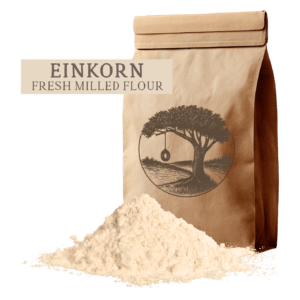
EINKORN WHEAT FLOUR
Price range: $20.00 through $132.00Clear3 Pounds10 Pounds25 Pounds - Best For Sourdough
KHORASAN WHEAT FLOUR
Price range: $15.00 through $87.00Clear3 Pounds10 Pounds25 Pounds - Best For Sourdough
RYE FRESH-MILLED FLOUR
Price range: $15.00 through $87.00Clear3 Pounds10 Pounds25 Pounds - Best For Pastries
SPELT WHEAT FLOUR
Price range: $15.00 through $87.00Clear3 Pounds10 Pounds25 Pounds